Click here to read an sample chapter from my latest book, Notes for Cellists
Extract from Chapter 1: Domenico Gabrielli, Ricercar No. 2
“The Baroque era originated in Italy, as did the instruments of the violin family. By the mid-seventeenth century, instrument builders had codified the proportions and acoustics of the violin, but not the cello. The youngest member of the violin family was still in an experimental stage, and could come in many shapes, sizes, and string tunings. Even its name was in dispute, with various historical sources describing it as a “bass violin,” “tenor viola,” or violoncino, as well as the more familiar violoncello. In ensembles, it typically took the accompanying basso continuo role. A solo repertoire did not yet exist, probably because of problems with size and tone quality in the early instruments. In Cremona, the Amati family was building large-model cellos with a back length of 79 centimeters. Their sound was resonant enough, but their size made them unwieldy for players. Violinmakers in the city of Brescia, 35 miles from Cremona, favored a smaller model with a back length of 71 centimeters. While these came with built-in advantages for ease of playing, the thick gut strings of the time could only produce a weak, muffled tone.
In the northern Italian city of Bologna, instrument builders came up with a solution to this problem by creating silver-wound gut strings, whose higher tension allowed for crisper articulation and tone production on a 71-centimeter instrument. At a stroke, smaller cellos were now both practical and acoustically viable. It is therefore no accident that the first solo cello repertoire originated in Bologna.
A flourishing center for music and especially for string playing, Bologna was home to the world’s oldest university and to two major music institutions, the Accademia Filarmonica and the Basilica di San Petronio. The latter boasted especial associations with cello playing, in part because of an acoustic that favored low-pitched instruments. When Maurizio Cazzati (1616-1678) became the music director of San Petronio in 1657, he hired a bassline-heavy group of instrumentalists to complement the existing vocal ensemble, including several cellists. San Petronio’s lineage of distinguished cellist-composers began with Giovanni Battista Vitali (1632-1692), Petronio Franceschini (1651-1680), and Domenico Gabrielli.
Nicknamed “Mingéin dal viulunzel” (“Little Domenico of the cello” in the Bolognese dialect) for his virtuoso playing, Gabrielli also excelled at composition. Following studies with Franceschini and the composer Giovanni Legrenzi, he won a position at the Accademia Filarmonica and later succeeded Franceschini at San Petronio. He wrote many oratorios and cantatas for the church, and operas for the secular audiences of Venice, Modena, and Turin. As his career grew, Gabrielli often left Bologna on tour. The San Petronio authorities tolerated his frequent absences until 1687, when they fired him for failing to show up to an important feast day. Gabrielli immediately found a new position in Modena, which seems to have provoked his former employers to regret their decision, since they hastily invited him back. Gabrielli returned to San Petronio and remained there for the rest of his life.
The lively charm of Gabrielli’s compositions would have won over the most irritable employer. As well as large-scale works, Gabrielli composed several pieces for his own instrument. These included cello sonatas with basso continuo accompaniment, a canon for two cellos, and seven Ricercare for unaccompanied cello. The title reveals something of Gabrielli’s motivation for composing them, since the Italian word means “search” or “research.” Each Ricercar comprises a rhapsodic, improvisatory collection of musical ideas. While Gabrielli may have been familiar with the organ Ricercare of predecessors such as Claudio Merulo (1533-1604) and Girolamo Frescobaldi (1583-1643), there was no blueprint for a cello version in this or any other genre. Gabrielli’s Ricercare were entirely experimental, each markedly different in length, structure, and character. All make a feature of Gabrielli’s virtuosity as a cellist in their brilliant passagework, double stops, and chords.
The longest and arguably most interesting of the set is Ricercar No. 2 in A minor. Unlike the single-movement structures of most of the others, it falls clearly into four through-composed sections. The first three end on dominant harmony, indicating that they are to be performed without a break. Though Gabrielli gives no instructions for tempo or mood, the meter changes between sections signal contrasting speeds and characters. The first section is in common time and the second in 3/2, suggesting a more relaxed tempo. For the third section, Gabrielli returns to common time before switching to 12/8 for the fourth. The sections are all in A minor, and none strays far from this key. While there are a handful of tonicizations and trips through the circle of fifths, the only modulations are to C, the relative major. This comparatively static harmonic plan allows Gabrielli the freedom to play with chains of syncopations, rhythmic contrasts, and other rhetorical flourishes. Rapid sequential passagework and “echo” effects in the second section anticipate Antonio Vivaldi’s use of such devices. In the fourth section, the compound meter suggests a pastoral character, or perhaps a giga like the ones that conclude each of Bach’s Six Cello Suites.
It is unclear whether Bach knew Gabrielli’s compositions, but we may still consider the Ricercare the indirect predecessors of Bach’s works for solo cello. Both Gabrielli and Bach discovered idiomatic ways to create both melody and harmonic accompaniment on a single bowed instrument. In his Ricercare, Gabrielli sought and found a new voice for the cello—that of a solo instrument.”– Miranda Wilson, Notes for Cellists: A Guide to the Repertoire, pp. 3-5.
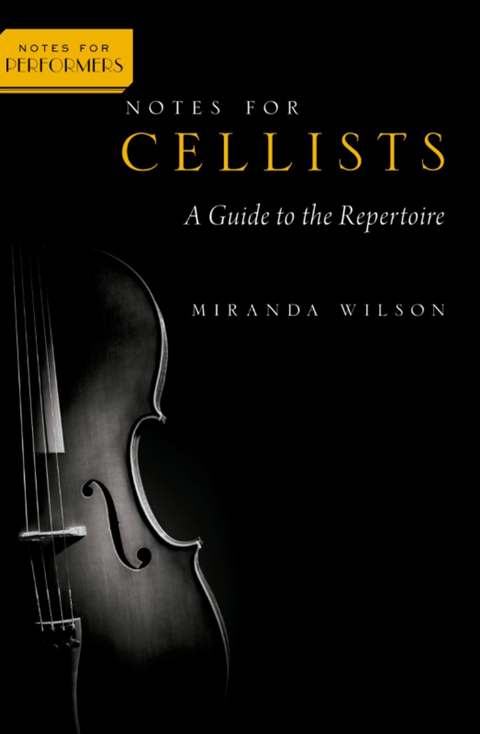
Notes for Cellists: A Guide to the Repertoire
Stop struggling to connect with classical cello repertoire
The Problem: You can play the notes, but the music feels shallow and disconnected. You lack the context and understanding that bring pieces to life.
Perfect for: Advanced students, professional cellists, cello teachers, and anyone who loves the cello and seeks to enhance their understanding of the cello’s vast repertoire
What You’ll Discover:
✅ Historical context for 36+ essential cello works from 1689 to the present day
✅ Ready-to-use program notes for concerts and recitals
✅ Composer stories that reveal the back story behind beloved cello works
✅ Analysis that enhances meaning and purpose in musical understanding
What Experts Are Saying:
“An important resource for bridging the gap between music theory and practical cello application… I’m certain I’ll revisit it time and time again...Wilson manages the balance commendably well… valuable insights on a broad range of cello repertoire while remaining accessible and easy to read.”
— The Strad Magazine
“In the end, true mastery of a composition should involve the kind of working knowledge this text offers…The thoroughness and clarity with which ‘Notes for Cellists’ interpolates these concepts is what serious players should strive for in their approach to the entire repertoire.”
— Strings Magazine
📖 304 pages | ISBN 9780197623749 | New York: Oxford University Press, 2024 | From $23.99
🛒 BUY ON AMAZON | 📚 BUY FROM PUBLISHER

Teaching Violin, Viola, Cello, and Double Bass: Historical and Modern Pedagogical Practices
Understand the world of string pedagogy
The Problem: Teaching string instruments requires knowledge of centuries of pedagogical wisdom, but where do you find it all in one place?
Perfect for: Professional string players, string educators seeking to broaden their approach to teaching, university and conservatory students, and college-bound high school string players
Complete Pedagogical Resource:
✅ 3 centuries of string pedagogy treatises summarized
✅ Historical methods with modern applications
✅ Comparative analysis of different teaching approaches
✅ All four instruments covered comprehensively
✅ Practical applications for every teaching situation
What Experts Are Saying:
“The book contains an abundance of information in exhaustive detail…Summarizing three centuries of string pedagogy to produce this comprehensive resource was a remarkable undertaking for these three string experts. They have left no stone unturned in bringing readers the fascinating history of string teaching and playing. Even if you have been teaching for decades, remember the adage, “To teach is to learn.” Here is a must-read for every string aficionado.”
— Strings Magazine
“This book could be seen as food for the enquiring, scientific mind when it comes to string pedagogy; the art.”
— The Strad Magazine
Co-authored with string pedagogy experts Dijana Ihas and Gaelen McCormick
📖 288 pages | ISBN 9780367724757 | New York: Routledge, 2023 | From $40.30
🛒 BUY ON AMAZON | 📚 BUY FROM PUBLISHER
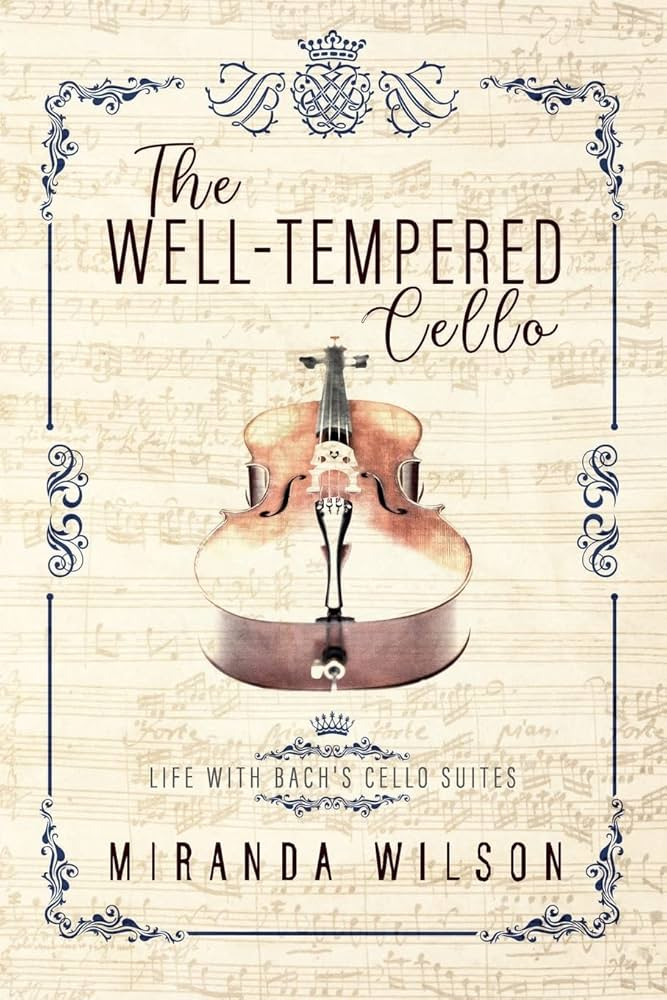
The Well-Tempered Cello: Life with Bach’s Cello Suites
Discover meaning in Bach’s masterpieces
Perfect for: Any cellist who loves Bach, performers preparing the Suites, and music lovers seeking deeper understanding
Your Journey Includes:
✅ Personal insights from performing all 6 suites from memory
✅ Historical context that illuminates Bach’s beloved masterpieces
✅ Philosophical reflections on why these pieces endure
✅ Performance preparation for this ultimate cello challenge
Why This Book is Different:
This is a memoir about living with Bach’s music every day. It isn’t just history or analysis, it’s a love letter to music that explains why beloved masterpieces become the soundtrack to life’s journeys, and why we return to this music again and again.
What Experts Are Saying:
“At a time when we have become accustomed to knowing the six suites as one continual piece, Miranda Wilson brings us back to a time when the Sarabande from the D minor Suite was enough by itself…In doing so, she will help listeners and players expand their own dimensions of how this wonderful music should go..”
— Strings Magazine
📖 224 pages | ISBN 9781629920474 | Austin: Fairhaven Press, 2022 | From $6.99
🛒 BUY ON AMAZON | 📚 BUY FROM PUBLISHER
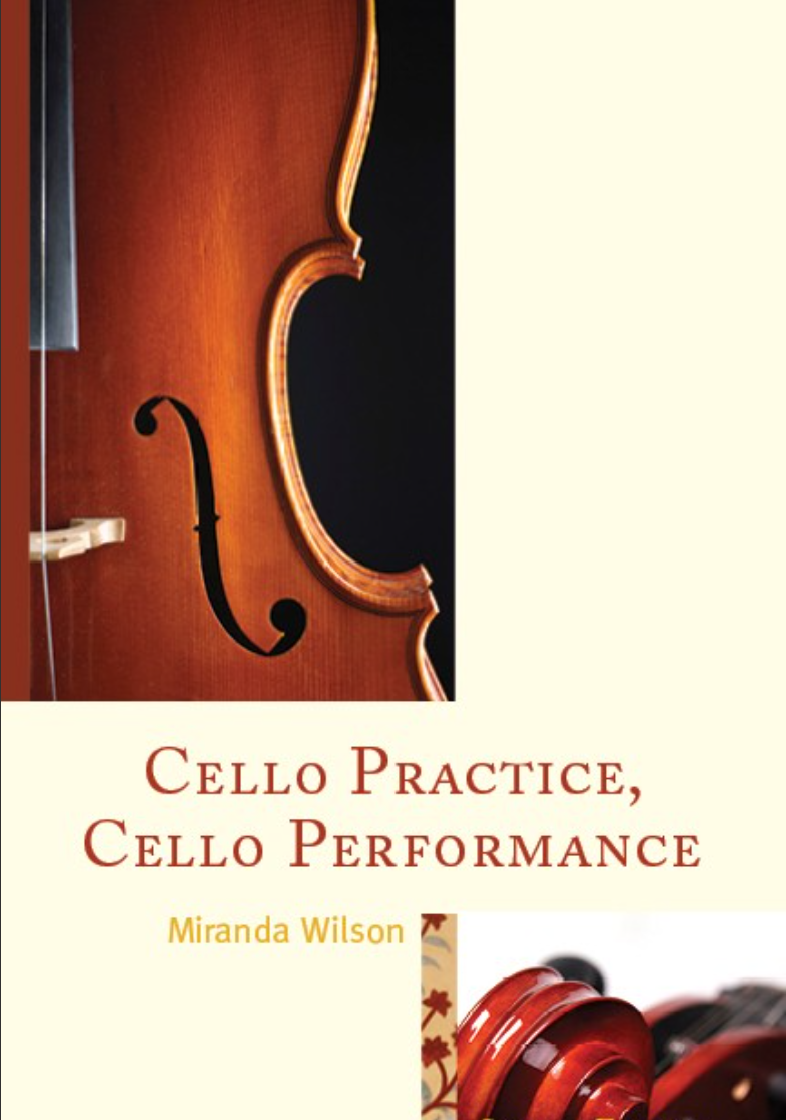
Cello Practice, Cello Performance
Finally practice efficiently and perform with confidence
The Problem: Hours of practice but little progress. Performance anxiety ruins your best efforts. You repeat the same mistakes because you don’t know how to practice effectively.
Perfect for: Cello teachers, intermediate to advanced cellists, college-bound high school cellists, adult amateurs, and anyone frustrated with inefficient practice
What You’ll Master:
✅ Cross-lateral exercises that coordinate both hands seamlessly
✅ Intonation mastery with the most detailed approach in cello literature
✅ Performance anxiety solutions that actually work
✅ Practice strategies that maximize progress in minimum time
✅ Mindful breathing techniques for technical and musical control
Real Results from Cellists:
“This book is an excellent resource for advanced cellists…By exploring strategies for playing the cello both effectively and efficiently, players are encouraged to become their own best teacher.”
— Stringendo Magazine
🎯 Essential for college auditions and professional development
📖 256 pages | ISBN 9781442246775 | London: Bloomsbury, 2015 | From $55
🛒 BUY ON AMAZON | 📚 BUY FROM PUBLISHER

 Miranda Wilson